



STEM CELL THERAPY FOR KNEE DEGENERATION

People Love Us on Google
UNDERSTANDING STEM CELL THERAPY FOR knee ARTHRITIS and DEGENERATION
Knee Pain
Gradual onset pain worsening with activity, prolonged sitting, or rest in degenerative joint disease.
Joint Stiffness
Reduced flexibility, especially after inactivity or mornings, limiting knee movement in arthritis.
Joint Swelling
Inflammation causing visible or palpable swelling around the knee due to cartilage breakdown.
Crepitus
Grating or grinding sensation and sounds during knee motion from roughened joint surfaces.
Reduced Mobility
Difficulty walking, climbing stairs, or daily activities due to pain and stiffness in degeneration.
Instability
Feeling of knee buckling or giving way from weakened supporting structures in osteoarthritis.
Your knee relies on stem cells for every healing process – whether it’s a minor meniscus irritation, a ligament sprain, cartilage loss from arthritis, or damage from tendinopathy. When those injuries or degenerative changes outpace your body’s natural repair ability, pain, stiffness, and loss of function take over.
Here’s a simple truth about how knee healing actually works: The stem cells that repair your meniscus, rebuild cartilage, reduce inflammation in arthritis, and regenerate damaged tissue come primarily from your bone marrow. This repair system has been working quietly in the background your entire life.
The challenge today isn’t that the system is broken – it’s that the quantity and quality of stem cells your bone marrow can deliver to the knee has dramatically declined compared to when you were younger. Injuries that once healed in weeks now linger for months or years, and arthritis that could have been kept at bay progresses faster than the body can counteract.
Choosing stem cell therapy for your knee is as straightforward as deciding to take a B-12 shot when you’re deficient – you do it simply because your knee is low on the exact repair cells it needs most, and it can no longer keep up with the damage from injury or arthritis.
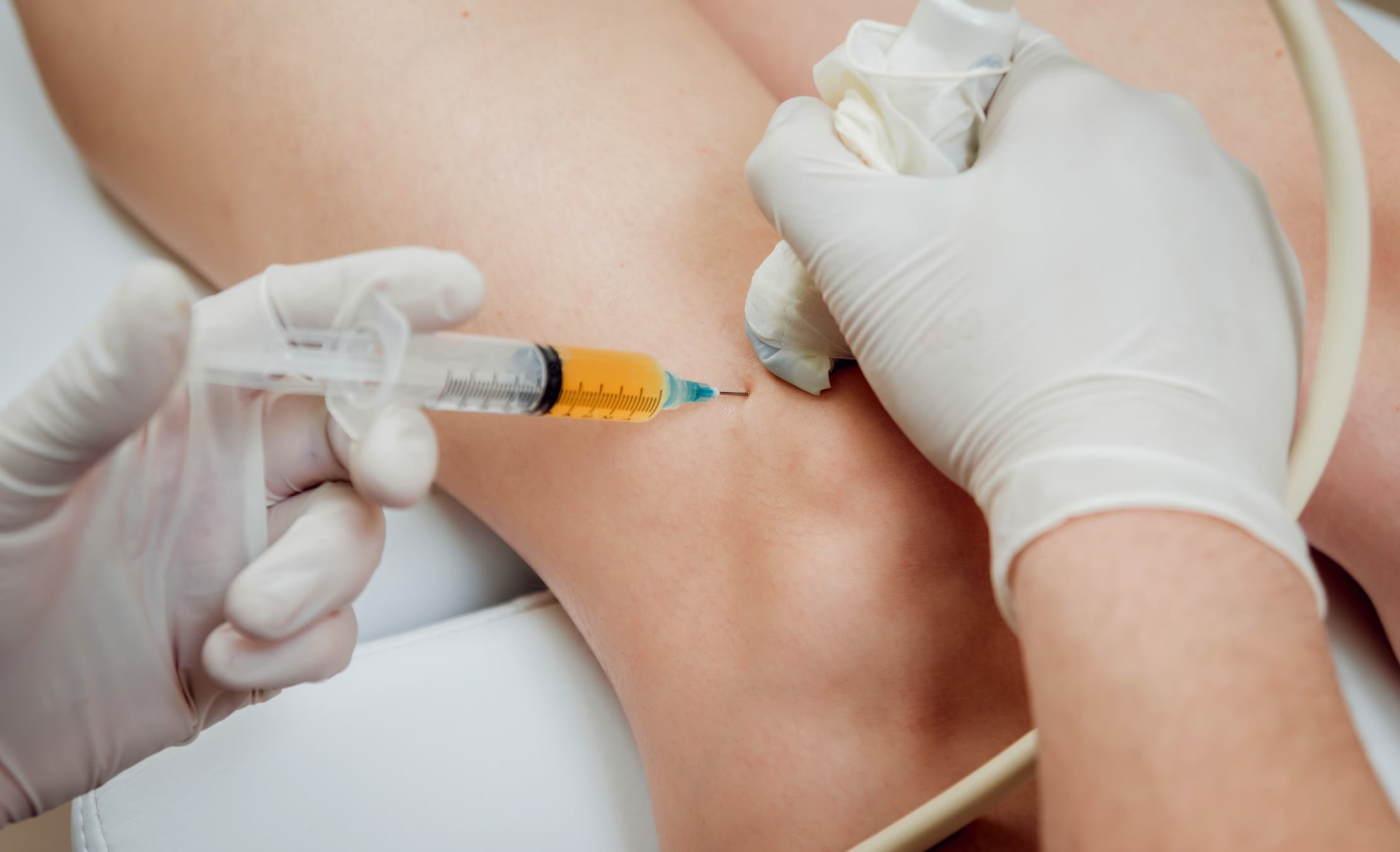
Modern stem cell therapy delivers a concentrated, high-potency dose of umbilical cord-derived stem cells (or carefully selected donor cells when appropriate) directly into the injured or arthritic knee joint, meniscus, ligaments, and surrounding tissues. These cells work in harmony with whatever stem cells your body is still producing – essentially turbocharging your knee’s natural healing and regeneration process exactly where it’s needed most.
Our providers specialize in knee conditions and will carefully evaluate your specific injury or degree of arthritis with imaging and examination. They calculate the precise number of stem cells required and design a personalized protocol, including the optimal delivery method (ultrasound or fluoroscopy-guided injections) and whether one treatment or a strategically timed series provides the best outcome. Many patients with meniscus tears, ligament injuries, or early-to-moderate osteoarthritis regain pain-free motion and strength after a single precise treatment, while those with more advanced arthritis or larger structural damage often see dramatic improvement with additional targeted sessions.
HOW STEM CELL THERAPY HELPS KNEE ARTHRITIS AND DEGENERATION

Pain Relief
Significant reduction or elimination of knee pain, improving comfort during activity and rest post-therapy.

Improved Flexibility
Decreased stiffness allowing better range of motion and easier movement after treatment.

Reduced Swelling
Diminished inflammation and joint swelling, promoting normal knee appearance and feel.

Smooth Motion
Elimination of grating sensations for fluid, painless knee movement following therapy.
Enhanced Mobility
Restored ability to walk, climb stairs, and perform daily activities without limitations.

Increased Stability
Strengthened knee support eliminating buckling sensations and improving confidence in movement.
KNEE STEM CELL THERAPY PROTOCOLS
| WJ Gold Protocol - Stage 1 or 2 Degeneration | $3,980 |
| • Day 1 : Joint Injection - remodulation of inflammation | |
| • Day 14 : Joint Injection - cellular engraftment | |
| WJ Platinum Protocol - Stage 3 or 4 Degeneration | $5,980 |
| • Day 1 : Joint Injection - remodulation of inflammation | |
| • Day 14 : Joint Injection - cellular engraftment |
* PRICE MATCH GUARANTEE

Latest Videos
Pain Free Relief of Severe Hip Arthritis?
Stem Cell Therapy for Knees: Say Goodbye to Pain in 2025
Joe Rogan - Mel Gibson on How Stem Cell Therapy Saved His Dad's Life
Stem Cell Therapy for Knee Joint Repair: DOES IT REALLY WORK?
Scientists study stem cell injections to treat knee arthritis
PUBLISHED RESEARCH PAPERS

PUBLISHED SCIENCE PAPERS ON STEM CELL THERAPY FOR Knee arthritis and degeneration
Get Your Free Consultation
Stem Cell Therapy for Knees: A Promising Alternative to Knee Replacement Surgery
Introduction
Knee pain, often stemming from conditions like knee osteoarthritis, affects millions in the U.S., prompting many to seek effective treatments. Traditional options include knee replacement surgery, but growing interest in knee replacement alternatives has spotlighted regenerative medicine for knee joint pain. Among these, stem cell therapy for knees stands out as a non-surgical stem cell therapy for knee replacement alternative, offering potential relief for issues such as stem cell treatment for knee cartilage damage, stem cell therapy for knee meniscus tear, and stem cell treatment for degenerative knee disease. This paper explores the advantages of U.S. stem cell therapy for knee pain over knee replacement, highlighting its regenerative potential using mesenchymal stem cells for knee OA and other approaches.
Understanding Knee Replacement Surgery
Knee replacement surgery, including partial vs total knee replacement and bilateral knee replacement surgery, is a common procedure for severe arthritis or injury. Signs you need knee replacement include persistent pain, swelling, and limited mobility that doesn’t respond to conservative treatments. hopkinsmedicine.org The surgery involves replacing damaged joint parts with artificial implants, often through minimally invasive knee replacement techniques to reduce recovery time.
However, knee replacement comes with notable drawbacks. The risks of knee replacement surgery include infection, blood clots, nerve damage, and implant failure. mayoclinic.org The knee replacement success rate is high, with 80-90% of implants functioning well after 10 years, but complications occur in 10-20% of cases. orthop.washington.edu How long does knee replacement last? Most endure 10-15 years, though knee replacement for young patients may require revisions sooner. health.harvard.edu
Recovery time after knee replacement surgery typically spans 6-12 months, with full mobility returning in up to a year. my.clevelandclinic.org Patients often need physical therapy and may face restrictions, such as caution when flying after knee replacement due to swelling or clot risks. The cost of knee replacement surgery in the US averages $40,000-$50,000 without insurance, varying by location and facility. carrumhealth.com Best hospitals for knee replacement include the Mayo Clinic and Arkansas Surgical Hospital, known for high success rates. health.usnews.com
Stem Cell Therapy for Knees: An Overview
Stem cell therapy for knee osteoarthritis involves injecting stem cells to promote healing and reduce inflammation. Mesenchymal stem cells for knee OA, often derived from umbilical cord or placenta tissue, are popular due to their ability to differentiate into cartilage. pmc.ncbi.nlm.nih.gov Umbilical cord stem cells for knee osteoarthritis provide anti-inflammatory benefits. cells4life.com Stem cell injections for knee pain target areas like stem cell treatment for bone-on-bone knee, stem cell therapy for knee ligament injury, and stem cell treatment for knee osteonecrosis.
Mesenchymal stem cell injection knee dosage varies, typically 10-100 million cells, with studies suggesting lower doses (≤25 million) may suffice for pain relief. pmc.ncbi.nlm.nih.gov This therapy suits diverse groups, including stem cell therapy for knee in elderly patients unfit for surgery, stem cell therapy for knee in athletes seeking quick return to activity, and stem cell therapy for knee after surgery to enhance healing. avidsportsmed.com It also addresses stem cell injections for knee swelling and stem cell therapy for bilateral knee OA.
The best type of stem cells for knee treatment often includes autologous MSCs for minimal rejection, though donor sources like umbilical cord are effective. dvcstem.com Stem cell therapy recovery time for knees is shorter, with most resuming activities in days to weeks and full benefits in 3-6 months. regenerativesportspineandspa.com
Advantages of Stem Cell Therapy as a Knee Replacement Alternative
Alternatives to knee replacement surgery, such as stem cell treatment, offer significant benefits. How effective is stem cell therapy for knees? Studies show pain reduction and improved function, with 70-80% of patients reporting relief, though results vary. Unlike knee replacement, it’s minimally invasive, avoiding surgical risks like infections or clots.
Recovery is faster—weeks versus months—allowing quicker return to daily life. For costs, stem cell therapy for knee ranges $3,000-$10,000 per knee, often less than knee replacement’s $20,000+. It regenerates tissue, potentially delaying or avoiding surgery, especially for stem cell therapy for knee in young patients. Exosomes vs stem cell therapy for knees:
Exosomes, derived from stem cells, offer similar signaling benefits without live cells, but stem cells provide direct regeneration for severe cases.
Practical Considerations
Insurance coverage for stem cell knee therapy is limited, as it’s often deemed experimental; Medicare and most plans don’t cover it. dvcstem.com For stem cell injections near me for knees, consult local regenerative centers. The best stem cell clinic for knee treatment includes Innovations CellCoLabs in The Bahamas and MDVISIT CLINIC Stem Cells, focusing on FDA-compliant protocols.
Conclusion
Stem cell therapy for knees emerges as a compelling knee replacement alternative, with advantages in invasiveness, recovery, and cost. By addressing root causes through regenerative medicine, it offers hope for those with knee pain, potentially transforming treatment landscapes in the U.S.